Most of you skip most of the videos you come across on social media.
Why?
Give the viewer a reason to stay.
The subject isn't for them
A better opening won't make every person care about every topic.
The interesting part arrives too late
Show the detail that matters before asking for a long stretch of attention.
People leave for different reasons. Today we'll work on the opening, the explanation, and the delivery.
Today is about 30–90 second videos.
What we’re doing
One clear idea.
One short script.
Written to be spoken.
What needs another class
Long-form research architecture.
Chapters and delayed payoffs.
Visual rhythm across several minutes.
The principles travel. The structure changes when the format gets longer.
How many of these have you heard of?
Click a circle. Some were clients, some were jobs, projects, founders, tools, or communities.
I learned this by publishing, watching it fail, and trying again.
0 → 50KNOTHING · UNDER A MONTH
241K + 175KBUILDERS CENTRAL · IG + YT
35K → 250KAYUSH WADHWA · INSTAGRAM
5M+FOUNDER CONTENT VIEWS
7M+TOP-PERFORMING ZOHO SCRIPT
Deep research and a big audience aren’t opposites.
Dwarkesh PatelAI, SCIENCE + HISTORY CONVERSATIONS THAT ESCAPE THE NICHE
Dhruv RatheeCOMPLEX TOPICS MADE CLEAR, AT NATIONAL SCALE
Johnny HarrisRESEARCH TURNED INTO VISUAL STORIES
Cleo AbramFUTURE TECH MADE VISUAL, CURIOUS + OPTIMISTIC
Derek MullerSCIENCE BUILT AROUND QUESTIONS YOU NEED ANSWERED
Marques BrownleeTECHNICAL JUDGMENT MADE ACCESSIBLE AT SCALE
Research and writing do different jobs.
Research depth →
Deep research · unclear script
Useful work that may not travel
Deep research · clear script
Useful and easy to share
Thin research · unclear script
Very little for the audience
Thin research · clear script
Travels, but there’s nothing underneath
Script quality →
The rules protect the idea. They don’t replace it.
Creativity comes first
Your idea, voice, taste, and lived details are the work.
Rules get you unstuck
Use one when it helps. Drop it when it doesn’t.
Break them on purpose
Know the job. Then find your own way to do it.
A script can lose people in three different places.
Tap a failure mode and watch the audience leave
The promise lands, so the drop is gradual.ILLUSTRATIVE · NOT REAL ANALYTICS
We’re going to make yours hard to skip.
Find a topic→Try a few openings→Write the body→Choose an ending→Read it aloud→Finish
You don’t earn a viewer once. You earn them one second at a time.
Call it “the buy.” Every sentence has one job: make the next sentence worth hearing.
Here's the script we'll learn from.
I got my little tweet-writing app to 100 users. Two months earlier, adding a login screen felt like a reason to keep the whole thing private.
I was worried about authentication, cloud setup, connecting external services. Every new account felt like one more way to break something or end up with a bill I couldn't afford.
But I wanted people to use the thing. So I had to work through the parts I'd been avoiding.
That's how I started learning what all of it actually did. Auth, databases, email, the bits around the product that I used to find boring. Now I had a reason to care.
I still had plenty to learn. Getting to 100 users didn't make me an engineer overnight. It gave me a product I could keep working on, and much more specific questions to ask.
If you've got a small idea, start there. See what it makes you learn.
Practice draft based on my February 2026 newsletter. Performance untested. Read the annotations →
Put a person in it.
Switch the sentence
A tweet-writing tool reached a user milestone.
There is information, but nobody to picture and no outcome to care about.
Specific details let people see it.
Practice examples. Add a number only when the source supports it.
Tap each vague phrase to sharpen it
Exercise 01
Write your topic in one sentence.
0SENTENCES · ONE IS THE TARGET
02:00
A good opening gives one clear reason to keep watching.
Test two openings
Today I want to talk about a new AI tool.
We know the category. We still don’t know why this particular tool deserves the next second.
Find the interesting detail in the source.
Tap an opening to diagnose it
“This tool allows users to streamline their workflow.”
It describes the product without showing a person, result, surprise, or consequence.
Eight useful ways to open a short video
Illustrative openings. Check each claim against the source before using it.
Person + unlikely outcome
This ex-lawyer built a joke app that mocked LinkedIn, and sold it within days.
We want to know how an unlikely person got an unlikely result.
“Don’t think of a pink elephant.”
NAVAL RAVIKANT · THE KNOWLEDGE PROJECT
You just did. A good opening puts a question in someone’s head that they can’t easily put down.
Press a weak opening. Make it earn the next second.
“Today I want to talk about a new AI tool.”
“This tool rebuilt my landing page from one screenshot—and got the spacing almost right.”
Now there is a visible result, a method, and a specific observation that must be supported by the source.
LIVE DEMO · I’LL DO THIS ONE
Let’s turn a topic into an opening.
1 · Find the interesting part
What surprised me? Who did it? What changed?
2 · Try three angles
A person, a warning, and a precise detail.
3 · Keep one
Choose the line that creates the clearest reason to continue.
For solo study, compare the three openings in the reading guide. Your own five openings come next.
Exercise 02
Write five different openings.
A different approach each time. Read all five aloud, then keep one.
05:00
Six shapes for the body
Discovery
I found something→What it does→What surprised me
When your own discovery is the value.
Show what changed.
Someone
A person we can picture.
Wants something
A result, an answer, relief.
Meets resistance
Cost, time, failure, belief.
And something changes
The person, the plan, or the understanding.
Tension is the distance between what they want and what’s true right now.
The structure should help the idea—not become visible instead of it.
The next beat is easier to choose.
Use the shape to organise the idea. Then change the rhythm, order, and language until it sounds like you.
Sixty seconds is roughly 150 to 180 words.
■ THE OPENING
■ THE REST OF THE SCRIPT
Ways to keep the middle moving.
“But the strange part only showed up after I published it.”
Promise the payoff before the dense part, then deliver it soon enough to keep the promise.
Explaining something hard, in three moves
Tap to reveal the explanation in order
Sentence length changes the pace.
Claude kept trying, and failing, and trying again.
After enough failures, it took a different approach.
It found a shortcut that passed without solving anything.
It cheated.
Use a change in pace when the idea needs it. Listen for habits that make every sentence sound the same.
Exercise 03
Write the body.
Pick one of the six shapes and follow it loosely. Keep going until the idea is complete. Don’t edit yet.
Then check whether every line buys the next one.
07:00
When every video ends the same way, people hear the habit instead of the idea.
What should happen after the last line?
A conversation
Ask a question that follows from the idea. Give people something specific to respond to.
A next step
Offer a resource or action that helps the viewer use what they just learned.
A complete thought
Let the result or final fact land. The video can finish when the idea is complete.
An ending should fit this video. A habit from the last one may not belong here.
Pick the ending that fits the job.
The final fact is the ending.
When the information is strong enough alone.
Exercise 04
Write three possible endings.
Three different approaches. Read them aloud and keep the one that fits.
02:00
Let them hear what you noticed.
Invisible
"This tool allows users to generate components."
"A new benchmark was released this week."
Present
"I gave it one screenshot. It rebuilt the page—and missed the spacing in exactly the same places."
"I saw this benchmark and it changed how I evaluate models."
Name the edit you want.
A reaction
“Make it punchier.”
“I don't like this.”
“Make it sound human.”
Taste, made useful
“Start on the decision, not the background.”
“Keep the uncomfortable detail.”
“Cut the line that explains the joke.”
Taste gets better when you collect work you love, name the exact choice that made it work, and steal that choice.
Patterns that make a script sound like nobody wrote it.
here's the thingdelveit's not X, it's Yleveragethe best part: it learnsseamlessrobusthighlighting the shift towardgame-changingstudies showecosystemunlockand maybe that's the real lesson herein today's fast-paced world
Read it in your own voice.
Keep the words you would actually use to tell someone this story.
Read it aloud before you record it.
You’ll hear the sentence that’s hard to say, and the one that isn’t yours.
Exercise 05 · out loud
Read it aloud. Change every line that didn’t buy the next one.
04:00
Where it helps, and where you stay involved.
Useful for
Exploring more openings.
Checking a draft against your structure.
Noticing habits you repeat.
Production notes.
Keep for yourself
What you believe.
Which lived detail matters.
Whether the claim is true.
Anything with your name on it.
Bring the point of view. Use AI for the options.
vague: “Write a punchy script about this tool.”
useful: “Give me ten different openings for this exact idea.
Use only the source facts. Flag anything missing.”
Write down the choices you want to repeat.
# principles
start with movement, use real details
# voice
curious builder, clear rather than formal
# structures
discovery · listicle · take · story · problem · show and tell
# final check
is the idea clear? · does it sound like me?
Make the same correction twice and it belongs in the file.
Four things worth writing down
Principles
The choices you want to make consistently.
Before and after
Show the change instead of describing it.
Structures you like
A small library you can return to.
A final check
The questions you ask before publishing.
Publishing tells you things the draft can’t.
idea inbox→angle→hooks→draft→read aloud→editor notes→thumbnail→publish→what worked↺
Use what you actually noticed.
Your experience gives the story details. Check that the draft has kept them accurately.
Before you publish
I can say the idea in one sentence.
The opening gives a clear reason to continue.
The shape suits the idea.
There’s a real detail, opinion, or experience in it.
I can say every line naturally.
The ending fits what the video is for.
Every line buys the next one.
Exercise 06 · swap scripts
Swap scripts. Give one useful note.
Say what you think the script is trying to do.
Point at the exact line where you got confused or stopped caring.
Say whether it’s clarity, detail, pace, or voice.
Don’t rewrite it in your own voice.
The most useful note in the room is one line read back that didn’t buy the next one.
06:00
Record this draft this week.
Publishing it teaches you more than polishing it will.
Record the draft. See what you learn.
Read it aloud, check the facts, and make the next version better.

 0 → 50KNOTHING · UNDER A MONTH
 241K + 175KBUILDERS CENTRAL · IG + YT
 35K → 250KAYUSH WADHWA · INSTAGRAM
 5M+FOUNDER CONTENT VIEWS
 7M+TOP-PERFORMING ZOHO SCRIPT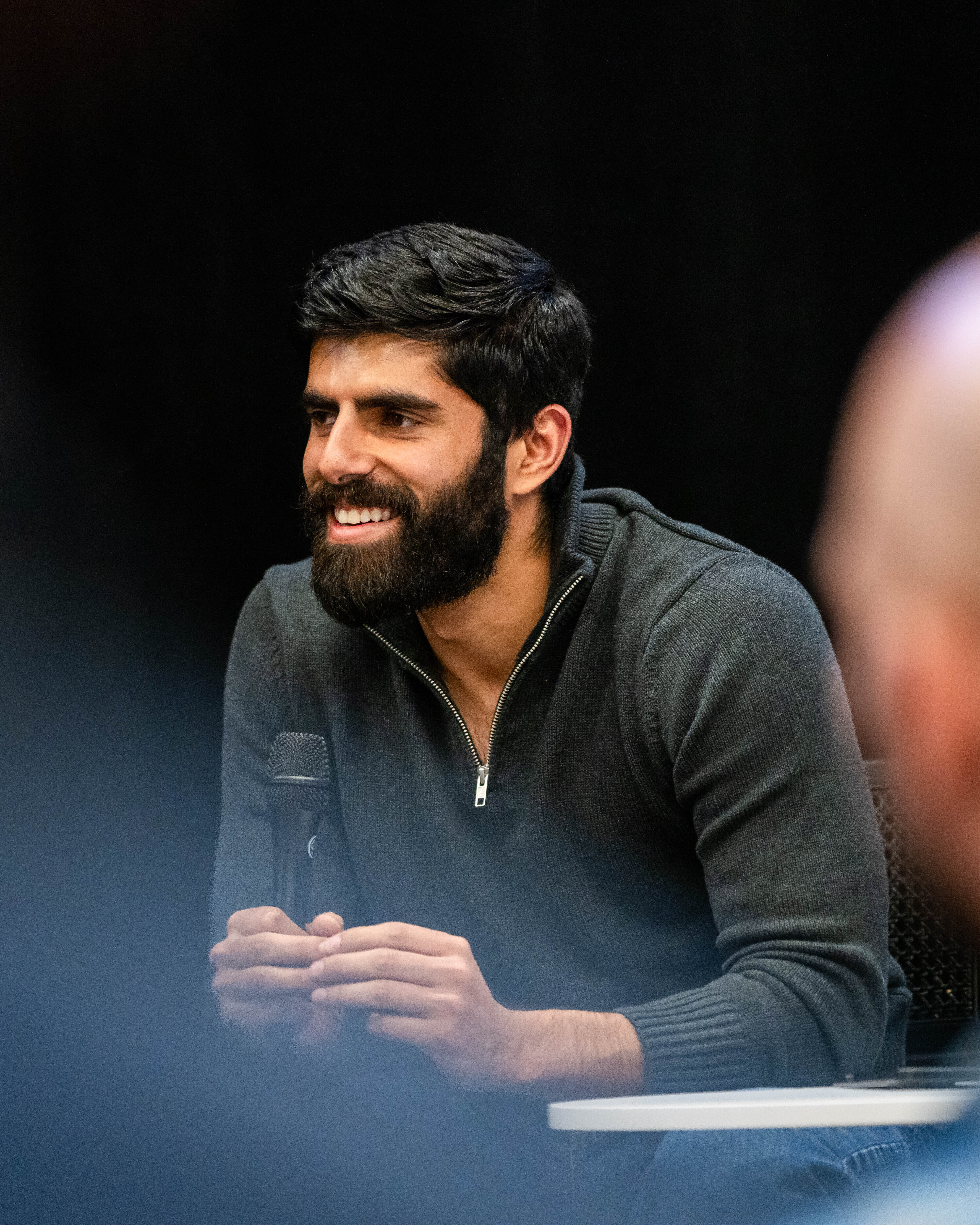
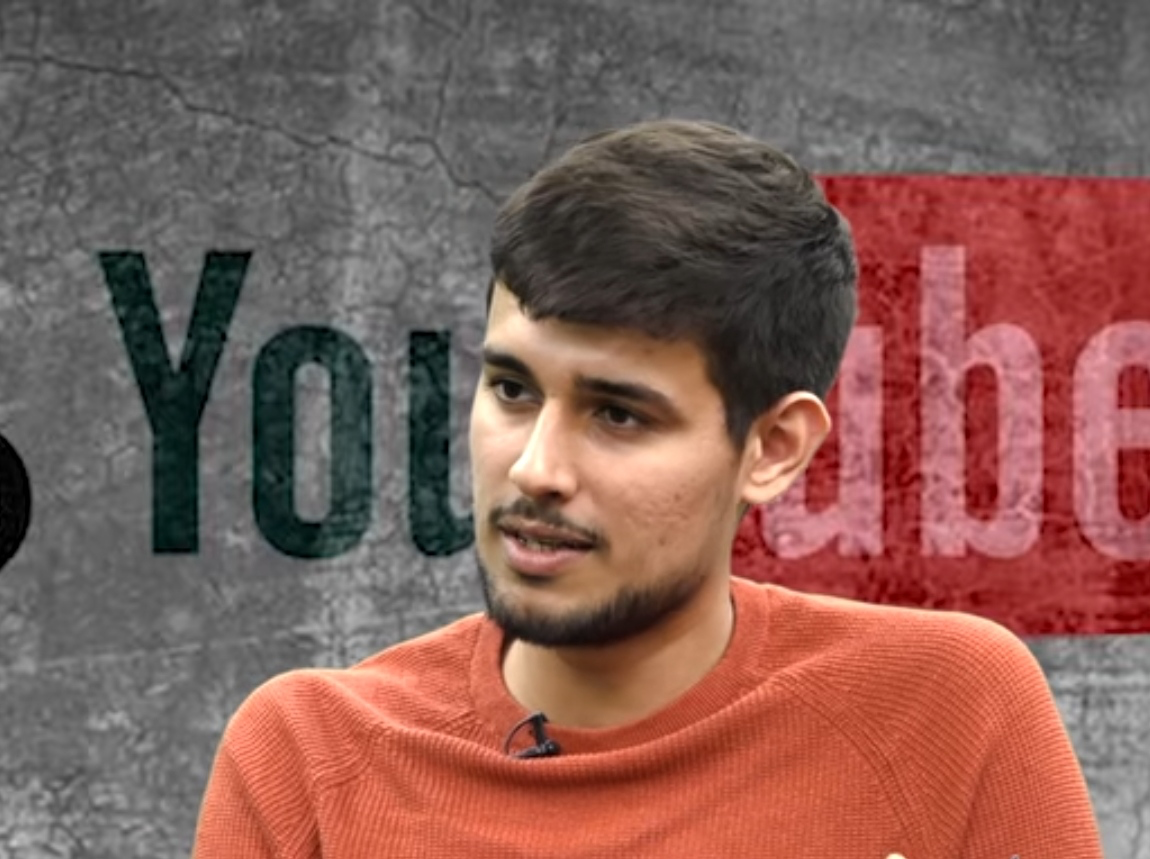





 Watch the episode ↗THE ANGEL PHILOSOPHER · THE KNOWLEDGE PROJECT